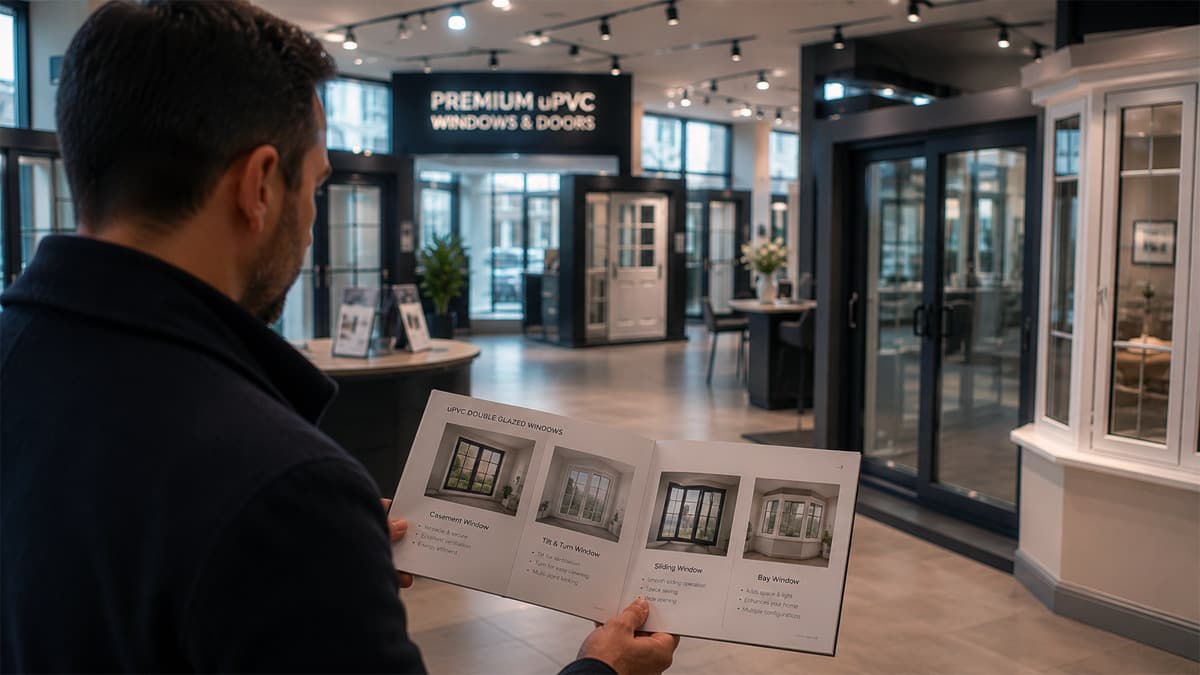
uPVC windows are available in many different styles, ranging from simple sliding windows to advanced tilt and turn systems and large architectural bay windows. Each window type is designed for a specific purpose such as ventilation, space saving, aesthetics, or panoramic views.
Generally, uPVC windows are divided into two main categories:
- Openable (Operable) Windows – Windows that open for ventilation.
- Fixed Windows – Non-openable windows used for light and views.
Choosing the right window type depends on room size, ventilation needs, safety, and building design.
Quick Comparison Table – uPVC Window Types
| Window Type | Key Feature | Best For | Ventilation |
|---|---|---|---|
| Casement | Hinged on side, opens like a door | Living rooms, bedrooms | ⭐⭐⭐⭐⭐ Excellent |
| Sliding | Sashes slide on track | Kitchens, balconies, small spaces | ⭐⭐⭐ Good |
| Tilt & Turn | Tilts from top or swings inward | High-rise apartments, bedrooms | ⭐⭐⭐⭐ Very Good |
| Fixed / Picture | Non-openable | Staircases, halls | None |
| Bay | Projects outward from wall | Living rooms | ⭐⭐⭐ Good |
| French | Double openable windows | Patios, balconies | ⭐⭐⭐⭐⭐ Excellent |
| Awning | Hinged at top, opens outward | Kitchens, bathrooms | ⭐⭐⭐⭐ Very Good |
| Sash (Vertical) | Slides vertically | Period homes, traditional style | ⭐⭐⭐ Good |
| Bow | Curved outward projection | Living rooms, panoramic views | ⭐⭐⭐ Good |
| Garden | Box-shaped projection shelf | Plant displays, kitchens | ⭐⭐ Good |
| Corner | Wraps around a corner | Modern architecture, unique views | ⭐⭐⭐ Good |
Detailed Types of uPVC Windows
1. Casement uPVC Windows

Casement windows are the most common and widely used type of uPVC window. These windows are hinged on one side and open either outward or inward like a door.
They provide one of the largest opening areas among all window types, allowing maximum airflow and ventilation. When closed, casement windows form a tight seal, improving energy efficiency and providing very good sound insulation due to tight sealing when closed.
Best for:
- Bedrooms
- Living rooms
- Areas where ventilation is important
Main advantage: Maximum ventilation and airtight sealing.
2. Sliding uPVC Windows

Sliding windows operate by moving horizontally along a track. Instead of opening inward or outward, the panels slide left and right.
They are ideal for spaces where there is no room for a swinging shutter. Sliding windows are commonly used in apartments, kitchens, and balconies.
Best for:
- Kitchens
- Balconies
- Small rooms
- Apartments
Main advantage: Space saving and easy operation.
3. Tilt and Turn uPVC Windows
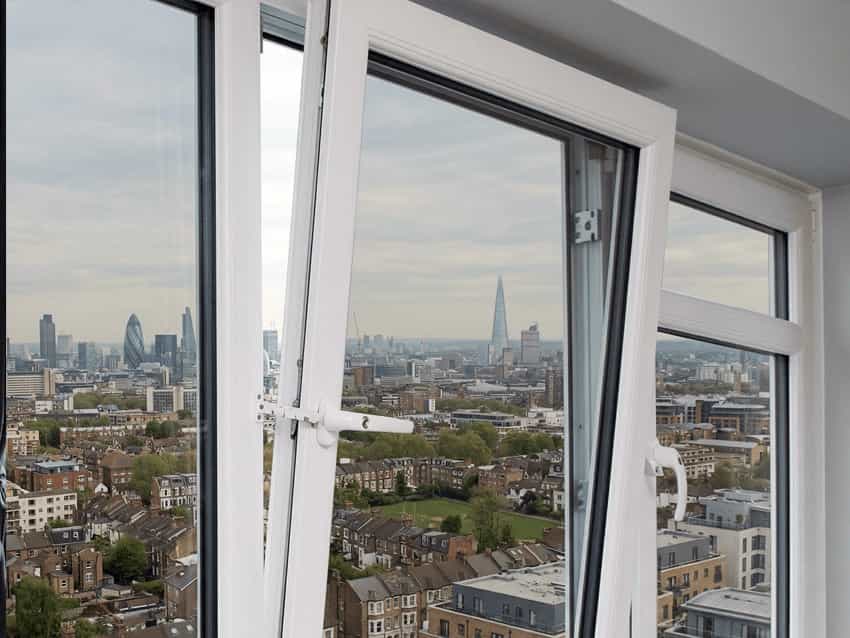
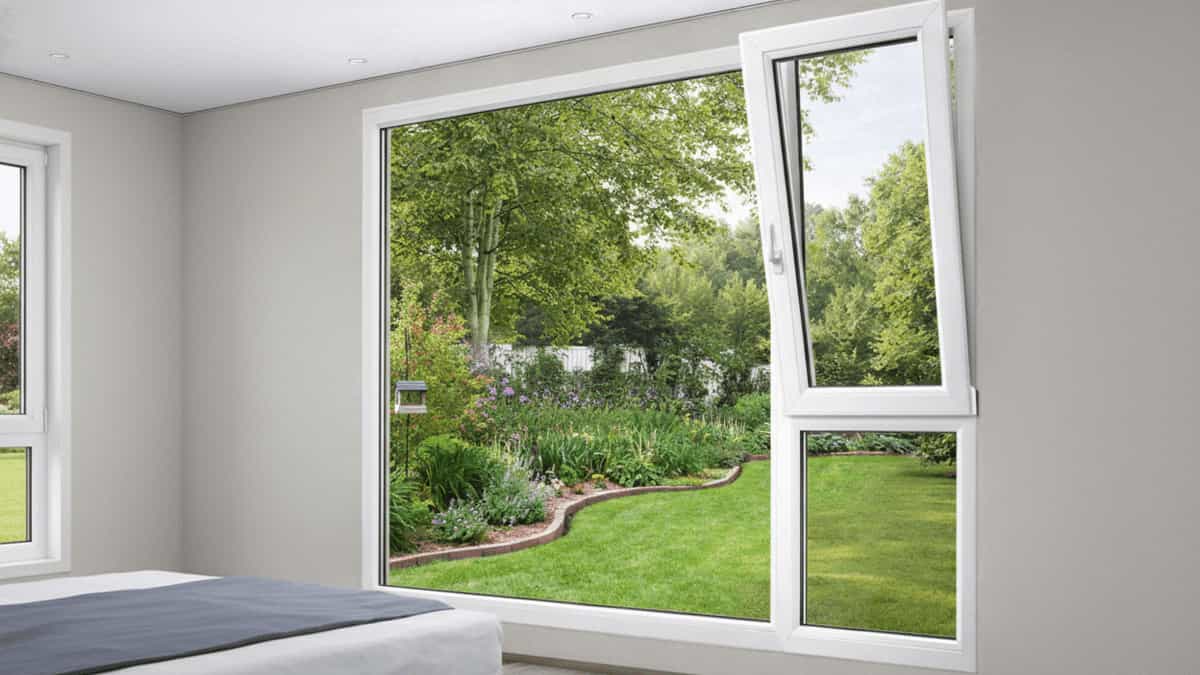
Tilt and turn windows are popular in modern homes and high-rise buildings. They offer two opening modes using a single handle.
- Tilt Mode: Opens slightly from the top for controlled ventilation
- Turn Mode: Opens fully inward like a casement window
This design provides safe ventilation, easy cleaning from inside, and strong sealing when closed.
Best for:
- High-rise apartments
- Bedrooms
- Rooms requiring safe ventilation
- Easy maintenance access
Main advantage: Dual opening system with high usability.
4. Fixed / Picture uPVC Windows
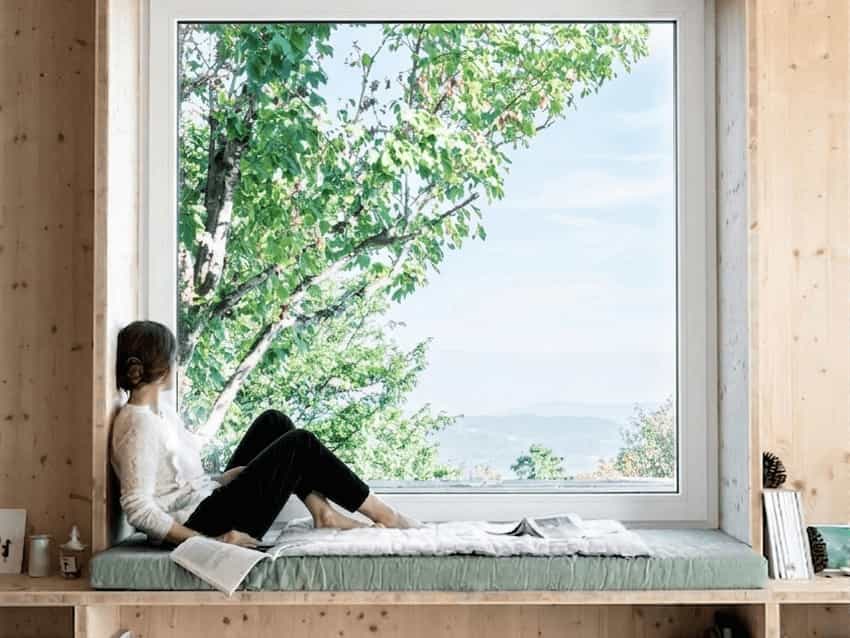
Fixed windows do not open. They are designed to bring in natural light and provide clear outdoor views. Because fixed windows are completely sealed and do not open, they usually provide the best sound insulation and thermal insulation among all window types.
Since there are no moving parts, they offer better insulation and are usually more cost-effective.
Best for:
- Staircases
- Hallways
- Large walls
- Living rooms with outside views
Main advantage: Maximum light and best insulation.
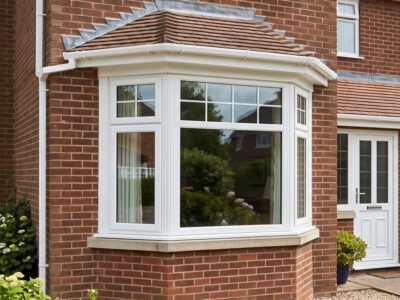
5. Bay uPVC Windows
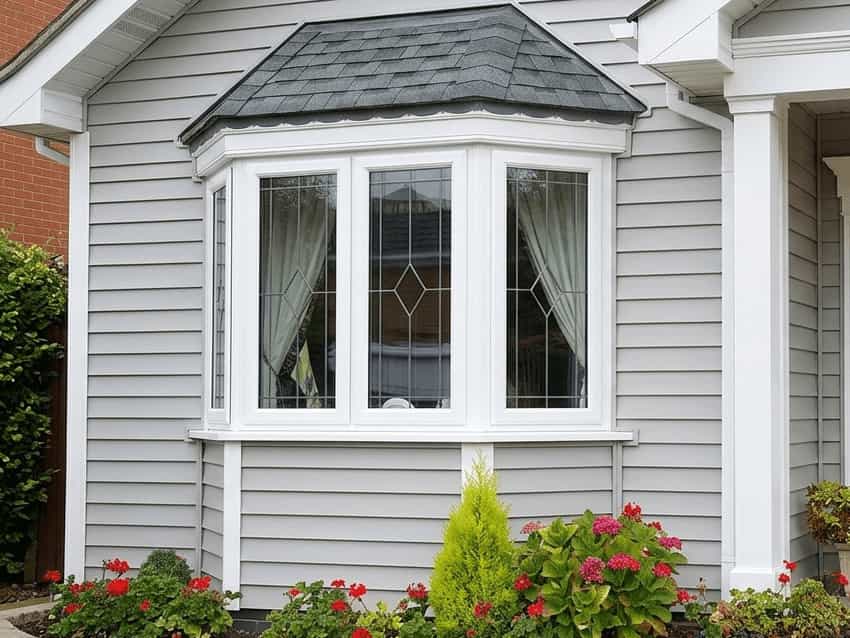
Bay windows extend outward from the building wall and usually consist of a fixed center window with openable windows on the sides.
They create additional interior space and enhance the overall look of a room while offering a wider field of view.
Best for:
- Living rooms
- Dining areas
- Reading spaces
- Front elevation design
Main advantage: Adds depth, space, and visual appeal.
Planning a Bay or Bow Window?
Choosing the right uPVC window style can make a big difference to how a bay or bow window looks and performs. Explore the different uPVC window options for bay and bow designs, including suitable styles and practical considerations.
→ Read: uPVC Windows for Bay Windows: Options for Bay & Bow Designs
6. French uPVC Windows

French windows consist of two casement shutters that open from the center without a fixed vertical divider. In technical terms, this design is often called a flying mullion window, where the central vertical bar is attached to one shutter and moves when the window opens. When both shutters are open, the entire opening becomes clear without any obstruction.
They are commonly used for balconies, patios, and garden-facing rooms.
Best for:
- Balconies
- Patios
- Garden-facing rooms
- Floor-to-ceiling openings
Main advantage: Large opening and excellent ventilation.
Additional uPVC Window Types (Less Common But Possible)
7. Awning uPVC Windows
Awning windows are hinged at the top and open outward from the bottom, creating a canopy that deflects rainwater while allowing ventilation. This design keeps the window open even during showers, making them ideal for kitchens, bathrooms, and utility rooms where weather-resistant airflow is needed.
Best for:
- Kitchens and bathrooms
- Rainy climates
- Areas requiring discreet ventilation
Main advantage: Weather-resistant ventilation.
8. Vertical Sliding Sash uPVC Windows
Vertical sliding sash windows feature two sashes that slide up and down within the frame, replicating the classic Georgian and Victorian aesthetic. Modern uPVC versions use spiral balances for smooth operation, delivering period charm with the thermal efficiency and low maintenance of contemporary double glazing.
Best for:
- Period-style homes
- Conservation areas
- Traditional architectural designs
Main advantage: Classic aesthetic with modern insulation.
9. Flush Casement uPVC Windows
Flush casement windows close so the sash sits perfectly flush with the outer frame, eliminating protruding lips for a sleek, minimalist appearance. This flush-fit design enhances weatherproofing and energy efficiency, making them a premium choice for modern builds and renovations seeking clean lines.
Best for:
- Contemporary homes
- Modern renovations
- Minimalist architectural styles
Main advantage: Superb energy efficiency and sleek appearance.
10. Bow uPVC Windows
Bow windows project outward in a smooth, curved arch rather than angled panels, creating a soft, elegant visual effect. They typically feature four or more glass panels, offering panoramic views and a gentle outward sweep that adds sophisticated architectural character to living spaces.
Best for:
- Living rooms
- Large exterior walls
- Homes seeking a softer architectural curve
Main advantage: Curved elegance and panoramic views.
11. Garden uPVC Windows
Garden windows are small, box-shaped projections that extend outward to create a miniature greenhouse shelf inside. Perfect for displaying plants, herbs, or decorative items, they bring natural greenery closer to the room while flooding the space with additional sunlight.
Best for:
- Kitchens
- Sunrooms
- Plant enthusiasts
Main advantage: Dedicated shelf space for plants and herbs.
12. Pivot uPVC Windows
Pivot windows rotate on a central horizontal or vertical pivot point, allowing the sash to swing open from the middle rather than the side. This balanced mechanism provides even ventilation and makes both the interior and exterior glass surfaces equally accessible for cleaning.
Best for:
- Modern office buildings
- Contemporary homes
- Easy-access cleaning requirements
Main advantage: Balanced ventilation and easy cleaning.
13. Hopper uPVC Windows
Hopper windows are hinged at the bottom and open inward from the top, directing airflow upward. They are commonly installed in basements or cellars where space is tight, providing secure and controlled ventilation while maintaining a low profile.
Best for:
- Basements
- Cellars
- Low-level openings
Main advantage: Secure ventilation in tight spaces.
14. Corner uPVC Windows
Corner windows wrap around the external corner of a building, with glass panes meeting at the edge for a seamless transition. This bold architectural feature floods interiors with light from two directions and offers uninterrupted panoramic views.
Best for:
- Modern architectural designs
- Corner rooms
- Homes with scenic surrounding views
Main advantage: Dramatic light and two-directional views.
15. Fully Reversible uPVC Windows
Fully reversible windows rotate a full 180 degrees, allowing the external glass pane to be cleaned safely from inside the home. This maintenance-friendly design is particularly valuable for upper-floor rooms where exterior access is difficult or dangerous.
Best for:
- Upper-floor apartments
- High-rise buildings
- Hard-to-reach window positions
Main advantage: Effortless external cleaning from inside.
16. Shaped / Specialist uPVC Windows
Shaped windows are bespoke uPVC fabrications available in designs like arched, circular, oval, trapezoid, or gothic forms. They allow homeowners to match historic architectural details or introduce unique contemporary features, adding distinct character to any property.
Best for:
- Period properties
- Churches and listed buildings
- Unique architectural statements
Main advantage: Complete design flexibility and individuality.
How to Choose the Right uPVC Window
When selecting uPVC windows, consider these key factors:
1. Ventilation
- Maximum airflow → Casement or French windows
- Controlled ventilation → Tilt and Turn windows
- Moderate ventilation → Sliding windows
- Rain-safe ventilation → Awning windows
2. Space Availability
- Limited space → Sliding windows
- Larger rooms → Casement or French windows
3. Cleaning and Maintenance
- Easy cleaning → Tilt and Turn or Fully Reversible windows
- Low maintenance → Sliding windows
4. Light and View
- Maximum natural light → Fixed windows
- Wider view and design → Bay, Bow, or Corner windows
5. Building Type
- Apartment → Sliding or Tilt & Turn
- Independent house → Casement or French
- Period property → Vertical Sliding Sash
Summary
uPVC windows come in multiple types, each designed for specific functional and design needs. There is no single best option for every situation.
In general:
- Casement windows are best for ventilation
- Sliding windows are best for compact spaces
- Tilt and Turn windows are best for safety and maintenance
- Fixed windows are best for light and insulation
- Bay and French windows are best for aesthetics and large openings
- Awning windows are best for rain-safe ventilation
- Sash windows are best for period-style homes
- Bow and Garden windows are best for aesthetic projection and plant displays
Choosing the right combination of window types can significantly improve ventilation, lighting, and overall comfort in a home.