If you are renovating a UK bathroom or en-suite, uPVC doors often appear to be the safe option: waterproof, affordable, and low-maintenance. In many homes, that assumption holds true.
However, uPVC bathroom doors perform best only when the bathroom conditions support them. When ventilation, layout, or installation details are overlooked, the same door can become a quiet long-term issue rather than an upgrade.
This guide helps you decide whether uPVC is suitable for your specific bathroom before committing to an installer.
Is uPVC the Right Choice for You?
uPVC bathroom doors are a good fit if:
- You are updating a rental property where durability matters more than design detailing
- You have a modern apartment or en-suite with a working extractor fan
- You want a low-maintenance alternative to repainting timber doors
- Water splash is limited to the shower area
uPVC may not be the best option if:
- The bathroom has poor or inconsistent ventilation
- You live in a period or heritage property
- You are aiming for a premium, design-led interior
- Moisture regularly builds up without drying time
If you already know where your bathroom sits, the decision becomes much clearer.
The “UK Test”: What Bathrooms Demand From a Door
UK bathrooms rarely damage doors through flooding. Problems usually develop slowly, driven by condensation behavior rather than direct water contact.
In real homes, the challenge is the combination of:
- Daily steam from enclosed showers
- Warm indoor air meeting cold external walls
- Bathrooms used multiple times a day with limited drying time
These conditions do not cause immediate failure. Instead, they create gradual performance issues that only become noticeable months later. This is why door choice matters more than many homeowners expect.
Moisture Performance: Where Problems Usually Start
uPVC itself does not absorb moisture. In the UK, bathroom door issues almost never start with the material — they start with how moisture moves around the door system.
In practice, problems appear when:
In many cases, these issues come down to bathroom door sealing and installation mistakes that are easy to overlook during renovation.
- Steam enters unsealed profile edges
- Frame-to-wall joints are treated like dry-room installations
- Hardware is chosen without considering long-term humidity exposure
In many renovations, uPVC doors look perfect initially. Condensation-related issues often surface later, sometimes after a winter heating cycle, when trapped moisture has had time to settle behind trims and frames.
Installation approach is just as important as material choice.
Hinged vs Sliding uPVC Bathroom Doors: The UK Reality
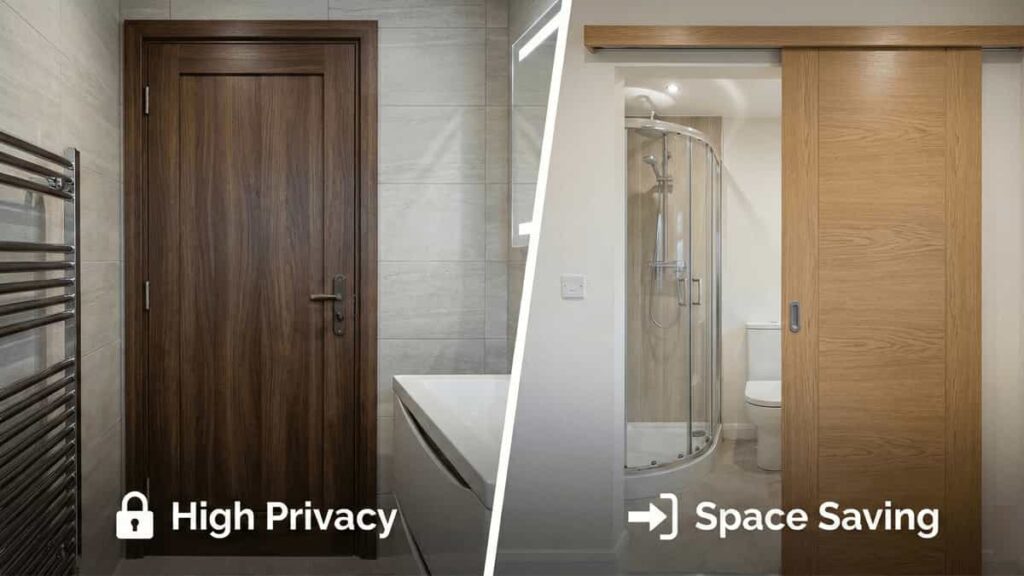
Sliding bathroom doors can look appealing on paper, especially where space is limited. In practice, many of these issues stem from uPVC sliding door limitations in wet areas, particularly in bathrooms with frequent steam and floor moisture. In everyday UK use, however, they often introduce small but persistent drawbacks.
Common issues include:
- Moisture collecting inside floor tracks
- Reduced acoustic privacy in en-suite bathrooms
- Cleaning difficulties in damp conditions
These are not design faults — they are use-pattern conflicts. In most standard UK bathrooms, hinged uPVC doors align better with how the space is actually used.
Unless space is extremely restricted, hinged doors remain the more reliable long-term choice.
Privacy, Light, and Safety in UK Homes
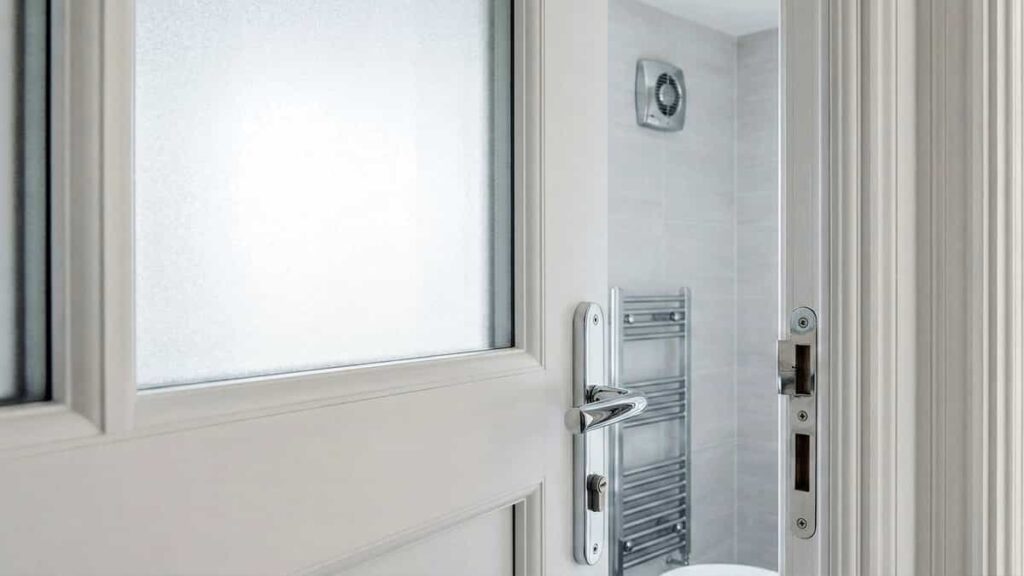
Many UK bathrooms, particularly en-suites, rely on borrowed light from adjacent spaces. This has made frosted glazing a popular option in bathroom doors, especially in windowless layouts.
Design choices should still account for practical safety:
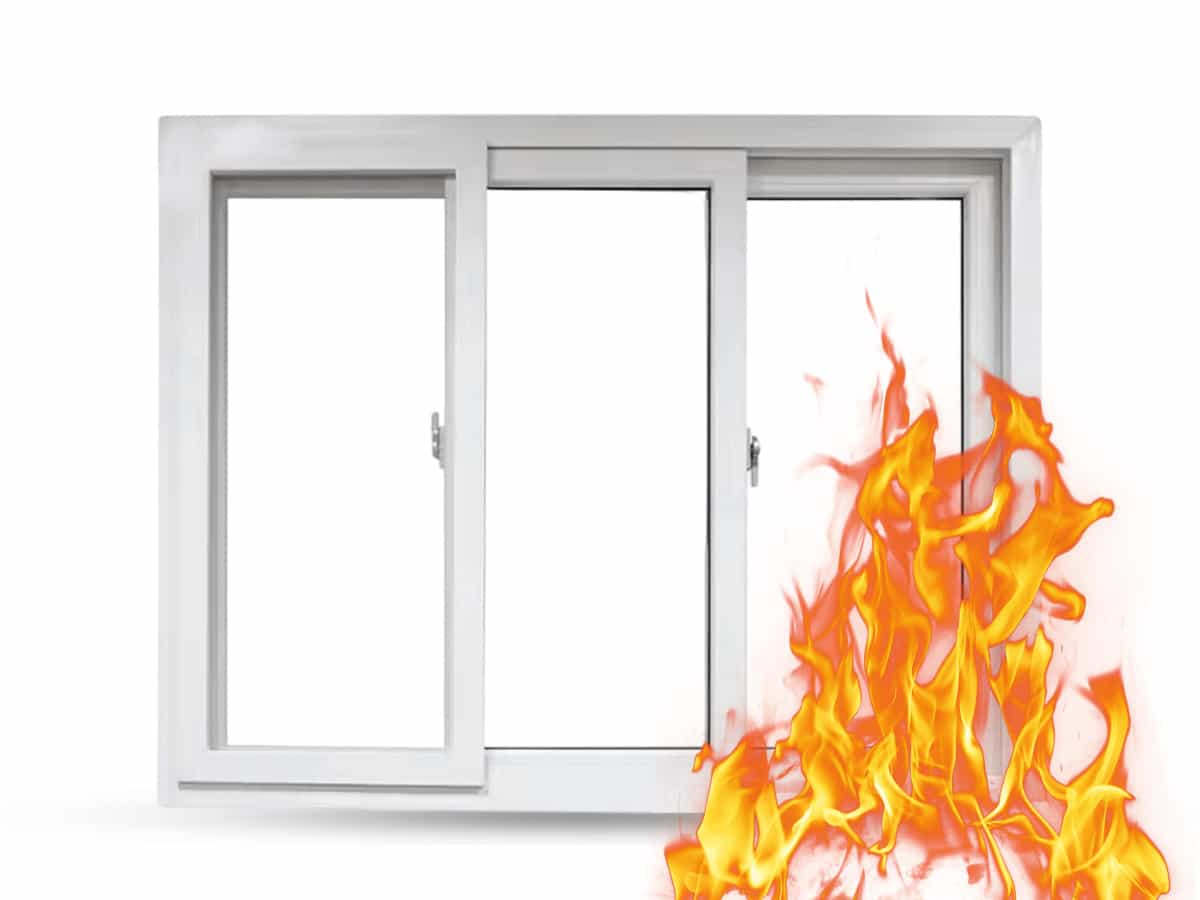
Beyond design, buyers should also understand the fire resistance and safety of uPVC doors, particularly in flats and shared residential buildings.
- Emergency release locks are essential in family and shared homes
- Glass panels increase door weight, placing additional stress on hinges
- In flats, buyers should remain aware of broader fire-safety expectations, even where bathroom doors are not directly regulated
Lower-quality systems tend to fail quietly over time through hinge sag, alignment loss, or frame movement rather than sudden breakage.
A Smart Choice Under the Right Conditions
uPVC bathroom doors work well in UK homes when the environment supports them. They are not a universal upgrade, and treating them as one is where dissatisfaction usually begins.
In well-ventilated, modern bathrooms, uPVC offers a clean, low-maintenance solution that outperforms timber over time. In poorly ventilated or design-led spaces, the same door can become a slow, ongoing frustration rather than an improvement.
The real question is not whether uPVC is “good” or “bad” —
it is whether your bathroom conditions match how uPVC is designed to perform.