Let’s clear the obvious first.
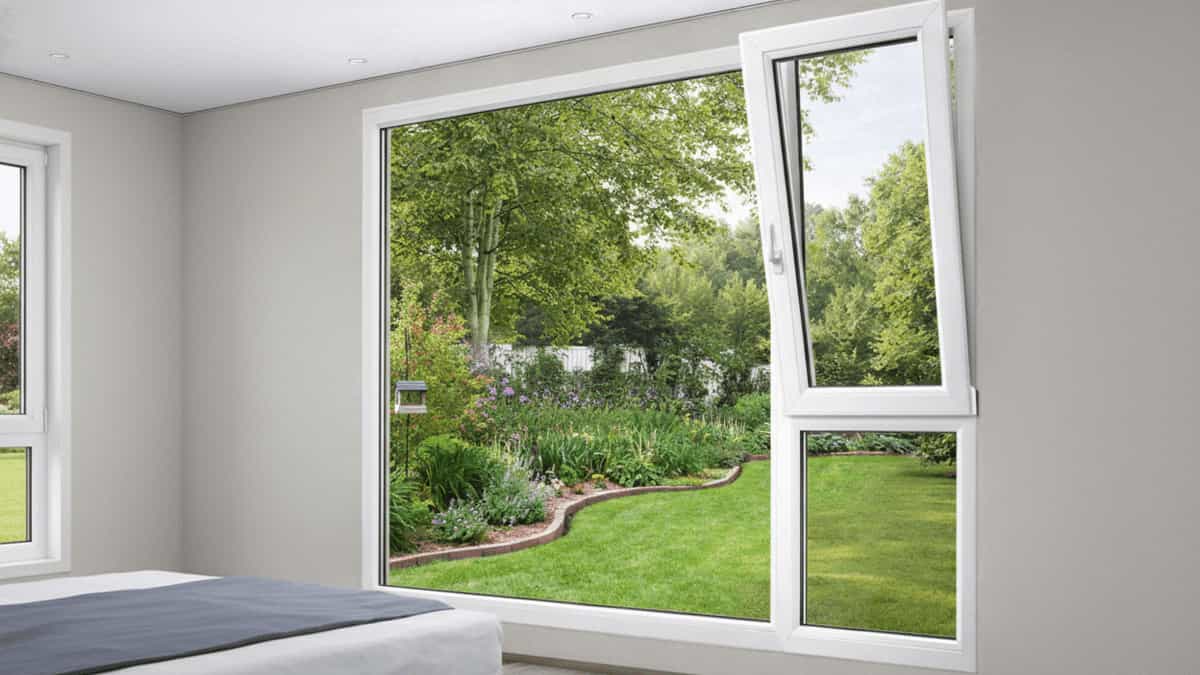
Yes!—this exact window style is absolutely possible in uPVC. In fact, it’s one of the smartest modern residential configurations you can choose.
We’re talking clean lines, massive glass, and zero clutter. But let’s move past the “brochure copy” and talk like real buyers.
Why This Design Just Works
This setup solves the three biggest homeowner needs in one go:
- ✔ Massive Natural Light: One dominant panel floods the room with daylight.
- ✔ Wide Uninterrupted Views: No frames cutting through your landscape.
- ✔ Precision Ventilation: Fresh air exactly where you need it.
Instead of breaking your wall into multiple small, messy windows, you get a high-impact design with fewer mechanical headaches.
Fixed Glass Panel = The Stability King 😌
A large fixed panel offers advantages most people underestimate:
- No Moving Parts: No hinges, no hardware stress, and no alignment issues.
- Superior Airtightness: Since it’s a sealed unit, it offers the best possible protection against dust, noise, and heat.
- Cleaner Aesthetics: It delivers that minimalist “glass wall” look.
The bottom line: No moving parts = fewer future maintenance bills.
The Side Casement: Controlled Airflow
Rather than making the entire massive window openable (which is heavy and risky), adding a single uPVC casement sash is the optimal move.
Casement sashes compress against the frame when locked, creating a tighter seal than sliding systems. That’s engineering, not just opinion 😏. For a deeper dive into how these work, check out the specific features and benefits of uPVC casement windows.
uPVC for Large Windows: The Steel Reinforcement Rule 🚨
(This Part is NON-NEGOTIABLE)
Now for the part most homeowners ignore—and regret later. Large uPVC windows MUST use steel reinforcement. uPVC is rigid, but it isn’t magic. As the glass gets bigger, the structural demands multiply:
- Weight: Large double-glazed units are incredibly heavy.
- Wind Pressure: A big surface area acts like a sail against the wind.
- Sagging Risk: Over time, gravity wants to pull that frame down.
Steel reinforcement (Galvanized Iron) provides:
- Structural Stability: Keeps the frame from twisting.
- Load-Bearing Strength: Safely transfers weight to the building.
- Alignment: Ensures your window stays square for decades.
Without it? You’re inviting frame bending, locking problems, and air leakage. To see how uPVC holds up against other materials in these large spans, see our uPVC vs. Aluminium frames comparison.
Profile Selection — The Silent Dealbreaker 😏
Here is where smart buyers win. For large glazing applications, standard thin profiles won’t cut it.
👉 Always choose a 70mm or higher profile system.
- Thicker profiles = Better rigidity.
- Bigger chambers = Space for stronger steel reinforcement.
- Physics over Drama: Thin profiles + large glass = an engineering mismatch that always collects interest later 💸.
For a broader look at how different designs handle these requirements, our guide on uPVC window styles and designs is essential reading.
Where This Design Excels
This configuration is a “cheat code” for modernizing these spaces:
- Living Rooms: For that high-end villa feel.
- Bedrooms: Maximum morning light with easy night-time ventilation.
- Scenic Views: Framing the outdoors like a piece of art.
- Study Areas: Bright, airy, and professional.
The Smart Buyer’s Checklist ✅
Before you sign that quote, run through this list:
- Verify the Steel: Confirm galvanized steel is inside all main frame members.
- Check the Profile: Is it 70mm or higher? Don’t settle for less for large spans.
- Glass Specs: Ensure the glass thickness is rated for the size (Toughened/Laminated).
- Avoid “10%-20% OFF”: Don’t try to save 10% today by using a lightweight frame that will sag in two years.
- Know the Risks: Understanding common uPVC problems helps you ask the right questions during installation.
Final Reality Check 😌
A large fixed glass window with a side casement is practical, energy-efficient, and visually stunning. It’s a long-term asset for your home—not just an Instagram prop.
Respect the reinforcement, choose a heavy-duty profile, and you’ll have a window that performs as good as it looks.
Ready to start? Avoid the most expensive pitfalls by reading our guide on uPVC window buying mistakes and how to avoid them.