When you invest in uPVC (Unplasticized Polyvinyl Chloride) doors and windows, you are buying more than just frames and glass. You are buying security, longevity, and structural integrity. However, there is a critical component hidden inside the white (or colored) profiles that often determines whether your installation will last twenty years or fail in five: Galvanized steel reinforcement.
For the average homeowner, reinforcement is invisible. It is the skeleton inside the PVC muscle. But a debate persists in the industry: Is this steel insert a non-negotiable engineering requirement, or is it sometimes upsold as an unnecessary upgrade?
This guide strips away the marketing hype to examine the true role of steel reinforcement, where it is mandatory, and how to ensure you are getting the structural backbone your home actually needs.
If uPVC Is Strong, Why Add Steel?
This is the most common question from homeowners. After all, uPVC is a durable, rigid material used in everything from plumbing pipes to window frames. However, “rigid” is a relative term.
uPVC has an excellent strength-to-weight ratio, but like any plastic, it is subject to creep (slow deformation under load) and thermal movement. In small, standard-sized windows, the material’s natural rigidity is often sufficient. However, as the span of the frame increases, or the weight of the glass increases, the profile requires additional support to prevent bowing, sagging, or twisting.
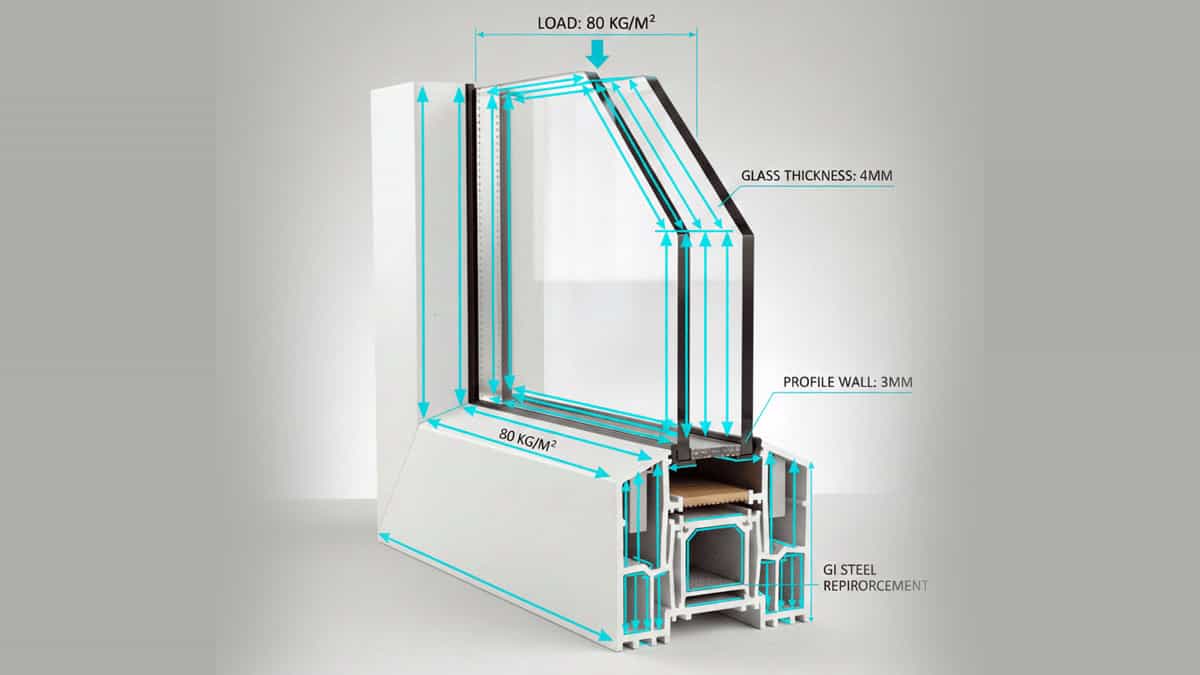
Steel reinforcement is inserted into the main chambers of the uPVC profile to act as a spine, carrying the loads that plastic alone cannot sustain over decades of use.
Understanding uPVC’s Material Behavior
To appreciate the need for steel, we must look at the “U” in uPVC: Unplasticized. Unlike other plastics that are flexible, uPVC is manufactured without plasticizers, making it tough and weather-resistant. This is perfect for withstanding rain and UV rays.
However, uPVC has a high coefficient of thermal expansion. It expands and contracts with temperature changes. Without reinforcement, very long frames can warp or bow in direct sunlight. Furthermore, while uPVC is impact-resistant, it lacks the modulus of elasticity (stiffness) of metal. Under continuous wind pressure or the static weight of a heavy double-glazed unit, an unreinforced frame can eventually distort, leading to operational failures.
What Steel Reinforcement Actually Does
Steel reinforcement serves three primary engineering functions:
- Load-Bearing: It supports the weight of the glass units. A large triple-glazed panel can weigh over 100kg; the steel transfers this weight safely down to the frame and into the wall.
- Structural Rigidity: It prevents the sash and frame from twisting (racking) when the handle is operated or when wind pressures apply force to the face of the window.
- Security: It provides a solid substrate for locking mechanisms. Hooks and rollers bite into or rest upon the steel, rather than just the PVC, making it significantly harder for burglars to force the door open.
Why uPVC Alone Isn’t Enough for Certain Designs
Modern architectural trends demand larger openings and minimalist sightlines. We want expansive views and floor-to-ceiling glazing. These aspirations directly contradict the limitations of raw plastic.
A small, 600mm x 600mm casement window might perform perfectly without reinforcement. However, a 2-meter-wide sliding door or a large fixed panel relies entirely on its internal steel to prevent the frame from bending under its own weight. As we explored in our guide on uPVC window size limits, the dimensions of the profile dictate the necessity of steel. Once you exceed certain span thresholds, steel isn’t an option; it is a requirement.
Doors vs Windows: Different Stress Demands
It is vital to distinguish between the reinforcement needs of a window and a door.
- Windows: Primarily deal with wind load and glass weight. Reinforcement is generally needed for larger sashes or wide openings.
- Doors: Face dynamic stress. They are slammed, leaned on, and operated daily. A door leaf is a cantilever; when you hang on it, the hinges transfer immense force to the frame. Without steel, the hinges can tear out of the PVC. Furthermore, the locking mechanism in a door must resist forced entry. The multi-point lock engages with keepers that are screwed through the PVC and into the steel behind it.
Where Reinforcement Is Absolutely Non-Negotiable
There are specific scenarios where omitting reinforcement is a recipe for disaster:
- Large Span Structures: Patio doors, French doors, and large picture windows.
- High Wind Zones: Coastal or high-rise properties where wind pressures are extreme. For homes in such exposed locations, understanding how to protect uPVC windows from the elements is important, and that starts with a reinforced frame.
- Dark Colors: Dark Grey, Black, or Green profiles absorb more solar heat. This increases the surface temperature of the PVC, making it softer and more prone to expansion. Dark frames must have full steel reinforcement to prevent warping.
- Heavy Glazing: Triple glazing or acoustic glass is heavy. The frame must be strong enough to carry that weight indefinitely.
Common Industry Shortcuts & Cost-Cutting Tricks
The uPVC industry is competitive, and raw materials (steel) are expensive. Unfortunately, this leads to corner-cutting. Here are some tricks used by less scrupulous fabricators:
- Partial Reinforcement: Instead of running a full-length steel from corner to corner, some insert a short section only where the lock is mounted. This helps the lock function but does nothing to stop the frame from sagging in the middle.
- Too-Thin Steel: Using steel that is below the recommended thickness (e.g., 1.0mm instead of 1.5mm or 2.0mm) provides very little rigidity.
- Omission in “Standard” Sizes: Assuming that because a profile is standard, it doesn’t need steel. A standard size can still be a large size that requires reinforcement.
Reinforcement Thickness: Why It Matters
Not all steel is created equal. The thickness of the galvanized steel (measured in millimeters) directly correlates to the strength of the finished product.
- 1.0 mm – 1.2 mm: Suitable for very small vents and minimal reinforcement in non-critical areas.
- 1.5 mm: The industry standard for most residential windows and doors.
- 2.0 mm – 3.0 mm: Required for large commercial applications, heavy-duty sliding doors, or security-rated frames.
Using steel that is too thin results in “flutter”—the frame may flex during operation, indicating long-term fatigue issues. When comparing materials, it’s worth noting the structural differences, as we did in our analysis of uPVC vs Aluminium for homes. While aluminum is inherently strong, uPVC relies on the combination of the plastic and the steel to compete.
How to Verify Reinforcement Like a Pro
How can you be sure the steel is inside your new windows before they are installed? You have a few options:
- The Magnet Test: Bring a small magnet to the showroom or your installation site. Place it on the frame. If it sticks, steel is present. (Note: While rare in standard uPVC, some high-end or composite reinforcements use aluminum, which is non-magnetic. However, for the vast majority of steel-reinforced systems, the magnet test is a reliable quick check.)
- Ask for Specifications: A reputable supplier will provide data sheets stating the steel thickness used for each profile type in your order. Do not accept vague assurances.
- Look at the Hinges and Locks: Quality hinges are screwed through the PVC and into the steel. You can often see the depth of the screws, indicating they are going into something more solid than just plastic.
- Check the Weight: A reinforced window is significantly heavier than a non-reinforced one. If a “large” window feels suspiciously light, be wary.
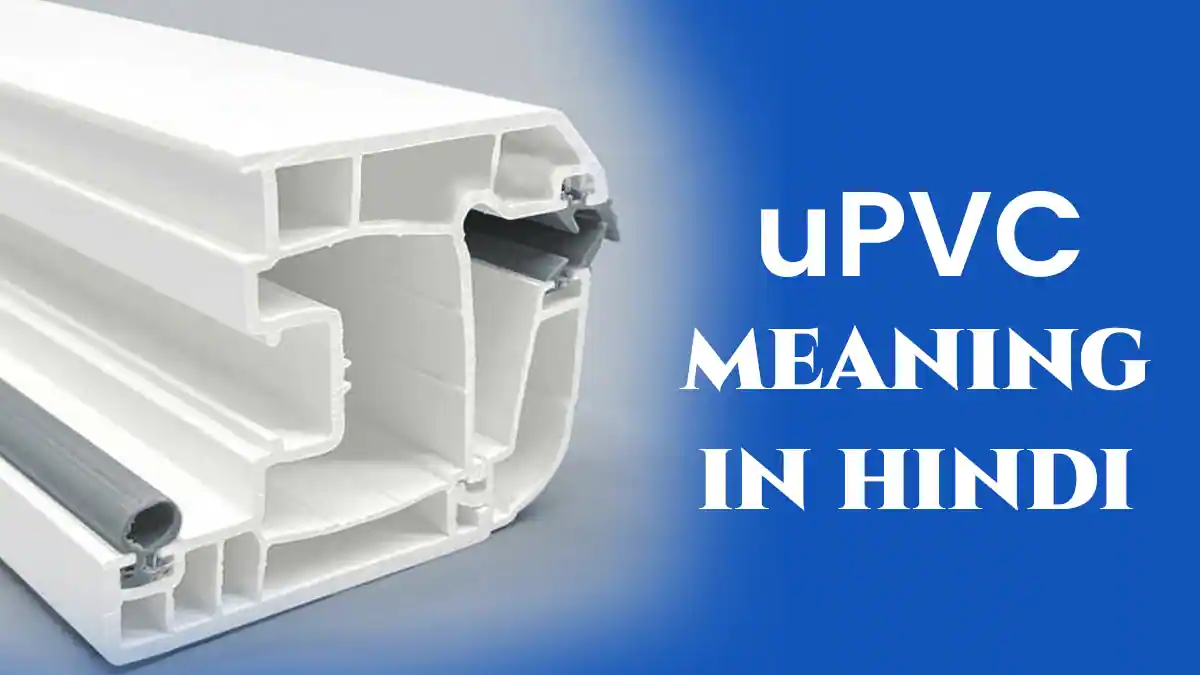
[Diagram Placeholder: See Figure 1: Cross-section of a multi-chambered uPVC profile with 1.5mm galvanized steel reinforcement inserted into the main chamber.]
Long-Term Structural Risks Without Reinforcement
If you skip the necessary steel, the problems won’t show up immediately, but they will appear.
Initially, the window might operate fine. But after a few seasons of thermal expansion and wind pressure:
- Sagging: The weight of the glass will cause the sash to droop, causing it to scrape against the frame.
- Jamming: The frame can bow, preventing the locking mechanism from engaging properly.
- Draughts and Leaks: Gaps appear between the sash and frame, compromising the weather seal and leading to the very issues you need to fix to stop draughts.
- Security Failure: A non-reinforced frame can be flexed away from the lock with a crowbar, allowing entry even if the lock itself is high-security.
Marketing Claims vs Engineering Reality
Marketing materials love to boast about “10-chambered profiles” and “European technology.” While multi-chambered designs improve insulation, they do not replace the need for steel.
The engineering reality is simple: Steel reinforcement is the skeleton; uPVC is the skin. The skin protects the skeleton from the weather, and the skeleton gives the skin its shape and strength. Believing that thick plastic alone can provide the same structural integrity as a steel-reinforced beam is a misunderstanding of basic physics. For the best results, the design of the window must match the structural demands of the opening, a topic we explore further in modern uPVC design trends.
Final Verdict: Structural Necessity or Sales Add-On?
So, is steel reinforcement a hidden structural backbone or an unnecessary upgrade?
It is absolutely a hidden structural backbone.
However, it is not always necessary for every single component of every job. A small, top-hung opening light in a sheltered location may not need it. This is where engineering judgment comes in.
The problem arises when the “unnecessary upgrade” label is applied to entire projects to cut costs. If a supplier offers you a price that is significantly lower than competitors, ask them where they saved the money. Very often, the answer is in the steel.
The Bottom Line: For the security, stability, and longevity of your uPVC doors and windows—especially in larger spans or with heavy glass—steel reinforcement is not a luxury. It is the fundamental difference between a product that looks good for a year and one that performs flawlessly for a lifetime. Before you sign the contract, verify the steel. Because when it comes to holding your home together, a hidden backbone is far better than a hidden weakness.